

Difference Between Triconex PLC and Other PLCs: A Complete Guide
 March
31, 2026
March
31, 2026
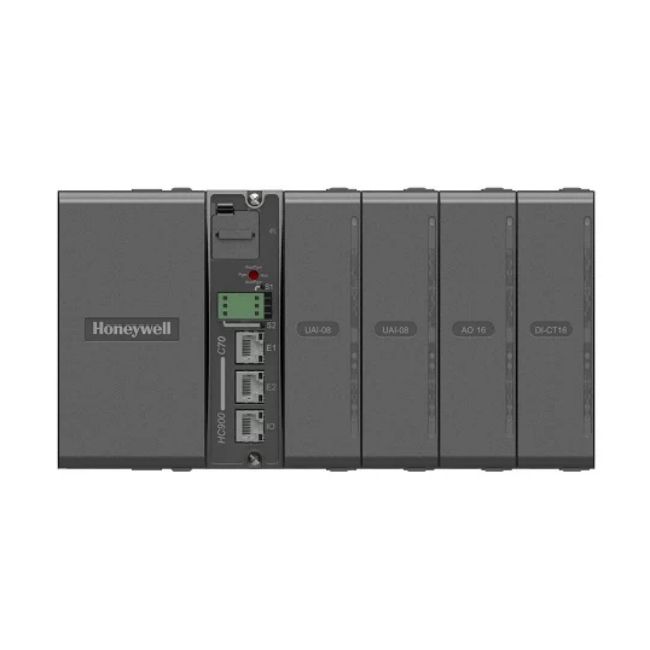
Difference Between Triconex PLC and Other PLCs: A Complete Guide
Programmable Logic Controllers (PLCs) play a critical role in industrial automation, controlling machinery, processes, and system operations. While most PLCs are designed for general automation tasks such as sequencing, process control, and machine logic, certain industries require a much higher level of safety and reliability. This is where Triconex PLCs stand out.
What is a Triconex PLC?
Triconex is a safety PLC brand developed by Schneider Electric, specifically designed for Safety Instrumented Systems (SIS). These systems are essential for protecting critical industrial processes and ensuring operational safety.
Unlike conventional PLCs, Triconex controllers are built with Triple Modular Redundancy (TMR) architecture and are certified up to Safety Integrity Level (SIL) 3. This makes them ideal for applications where system failure is unacceptable.
Triconex PLCs are widely used in industries such as oil & gas, petrochemicals, power generation, and heavy manufacturing—where continuous operation and safety compliance are mandatory.
Triple Modular Redundancy (TMR) Explained
The core advantage of Triconex PLCs lies in their TMR architecture, which ensures exceptional fault tolerance.
How TMR Works:
Three independent processors run in parallel
Each processor reads the same input data simultaneously
Outputs are compared using a 2-out-of-3 voting mechanism
If one processor fails or produces incorrect results, the other two override it
This design eliminates single points of failure and ensures:
Continuous system operation
High availability
Maximum safety integrity
Typical Applications of Triconex PLCs
Due to their SIL 3 certification and fault-tolerant design, Triconex systems are commonly used in safety-critical applications, including:
Emergency Shutdown Systems (ESD)
Fire & Gas Detection Systems (FGS)
High-Integrity Pressure Protection Systems (HIPPS)
Turbine and Compressor Protection
These applications are widely found in:
Oil refineries
Chemical plants
Power stations
Offshore platforms
In such environments, even a minor failure can lead to severe safety, environmental, or financial consequences.
What Are Conventional PLCs?
Conventional PLCs are general-purpose automation controllers used across a wide range of industries. Leading manufacturers include:
Siemens
Rockwell Automation (Allen-Bradley)
Schneider Electric (Modicon series)
Mitsubishi Electric
ABB
Omron
Key Features:
Single or dual processor architecture
Modular I/O systems (digital, analog, communication)
Support for multiple programming languages (Ladder Logic, Structured Text, Function Blocks)
Industrial communication protocols (Modbus, Ethernet/IP, Profinet)
These PLCs are highly reliable for standard automation tasks such as:
Machine control
Motion control
Production line automation
However, they are not inherently designed for safety-critical applications unless combined with dedicated safety modules.
Diagnostics, Maintenance, and Reliability
Triconex PLC Systems
Triconex PLCs offer advanced diagnostics and maintenance capabilities, including:
Continuous self-testing of CPUs, I/O modules, and communication buses
Real-time fault detection and logging
Predictive maintenance alerts
Hot-swappable modules (replacement without system shutdown)
These features significantly improve system uptime and reduce maintenance risks.
Conventional PLC Systems
Standard PLCs typically provide:
Basic fault detection (module failure, communication errors)
Limited diagnostics
In most cases, system shutdown is required for hardware replacement, which can lead to production downtime.
Performance Considerations
Due to triple processing and voting mechanisms, Triconex PLCs may have slower raw scan times compared to conventional PLCs. However, they are optimized for:
Deterministic safety response
Guaranteed execution timing for safety functions
On the other hand, conventional PLCs are better suited for:
High-speed machine control
Motion applications
Real-time automation tasks
But they lack built-in high-level safety redundancy.
Cost and Total Value
Implementing a Triconex Safety PLC system involves higher initial investment due to:
Redundant hardware architecture
Safety certifications
Engineering and lifecycle management requirements
However, the Total Cost of Ownership (TCO) is often justified by:
Reduced unplanned downtime
Lower risk of accidents and environmental damage
Extended equipment lifespan
Compliance with international safety standards
In contrast, conventional PLCs have lower upfront costs but may not meet the requirements for SIL 3 applications or critical safety systems.
Conclusion
The key difference between Triconex PLCs and conventional PLCs lies in their purpose:
Triconex PLCs → Designed for safety-critical applications with maximum reliability and fault tolerance
Conventional PLCs → Designed for general automation with flexibility and cost efficiency
Choosing the right PLC depends on your application requirements. For high-risk industries where safety cannot be compromised, Triconex remains one of the most trusted solutions in the market.
We are professional in Industrial Automation & Electrical Distribution instruments, our product mainly including: Pressure / Temperature Transmitters, Flowmeters, Analyzers, DCS Modules, PLC, Controller, Feild Communicators, Gas Detectors/ Sensors, Safety Barrier and Isolator, Multimeters, Calibrators, Recorder, Soft Starters, Inverters, Positioners, Valves, Circuit Breakers, Contactors, Switches, Power Supply, HMI, Terminal Block, Relay etc.Please feel free to inquiry us by E-mail: lily@hkxytech.com
Our main brands:
Yokogawa, Honeywell, Schneider, Emerson, Rosemount, Fisher, ABB,Siemens, MTL,Pepperl+fuchs, Hirschmann, Phoenix Contact, Weidmuller, ASCO, Norgren, Danfoss, Cisco, MOXA, IFM, Omron, GE, Rockwell(Allen Bradley), EATON, MOOG, Yaskawa, Festo, Fluke, Foxboro, PR electronics, etc.
We promise 100% original brand new with 1-year warranty.
If you are interested in our products, please feel free to contact us!
---
HONGKONG XIEYUAN TECH CO., LIMITED
Contact: Ms. Lily
Email: lily@hkxytech.com
WhatsApp/Wechat: +86 13789949182
Latest News
-
ABB Smart Power and Smart Buildings Price Adjustment Notice 2026
August
31, 2026
-
Danfoss Drives China Price Adjustment Notice 2026
August
14, 2026
-
Hirschmann MSM60-Q6Q69999SY9HH9E Media Module for MSP Switches
August
07, 2026